
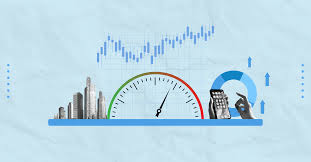
If investing were purely logical, markets would move in perfect alignment with economic data and corporate fundamentals. But we all know that’s not how it works. Markets are driven not just by numbers — but by emotions. Optimism, fear, greed, and uncertainty shape every rally and crash. Learning how to read market sentiment — the collective mood of investors — is one of the most underrated skills in finance.
Whether you’re a day trader watching Twitter trends or a long-term investor seeking better entry points, understanding market psychology can give you a valuable edge. In 2025, where algorithms analyze emotions faster than humans can blink, mastering sentiment analysis means staying one step ahead of the crowd.
What Is Market Sentiment — and Why It Matters
Market sentiment is essentially the emotional tone of the market. It reflects how investors feel about the future — bullish (optimistic) or bearish (pessimistic). While fundamentals like earnings, GDP growth, and interest rates set the stage, sentiment decides how those facts are interpreted.
For example, the same inflation report might trigger a sell-off in a fearful market or a rally in an optimistic one. As Warren Buffett famously said, “Be fearful when others are greedy and greedy when others are fearful.”
Research supports this idea. A Yale School of Management study found that shifts in investor sentiment account for up to 25% of short-term market movements — often more than fundamentals themselves. That means ignoring sentiment is like driving with one eye closed.
The Fear & Greed Index: A Modern Sentiment Barometer
One of the most popular tools for gauging sentiment is CNN’s Fear & Greed Index, a composite indicator that measures what emotions are driving the market at any given time.
It’s based on seven metrics — including stock price momentum, market volatility (VIX), safe-haven demand, and trading volume — and produces a score between 0 and 100.
- 0–25 = Extreme Fear: Investors are panic-selling, often signaling a buying opportunity.
- 75–100 = Extreme Greed: Euphoria dominates, and markets may be overheating.
Historically, extreme readings have been contrarian signals. For instance, in March 2020, the index hit a record low of 8, just days before the S&P 500 began one of its fastest recoveries ever. Conversely, it peaked at 94 in late 2021, shortly before growth stocks began their sharp correction.
While not perfect, the Fear & Greed Index helps investors cut through noise and recognize when emotions, not logic, are steering the market.
Beyond Indices: Tracking Sentiment Through Social Media
In the digital age, social platforms have become powerful sentiment engines. From Reddit’s r/WallStreetBets to X (formerly Twitter) and TikTok, investor opinions move faster — and sometimes louder — than institutional research.
Social media sentiment has proven to move markets in unexpected ways. The 2021 GameStop saga showed how collective enthusiasm could challenge Wall Street giants. According to Bloomberg, mentions of $GME on Reddit correlated with daily trading volume surges exceeding 900%, as retail investors coordinated massive short squeezes.
In 2025, social sentiment tracking has evolved into a data-driven science. Platforms like Santiment and Alternative.me analyze millions of social media posts daily to identify mood shifts across crypto and equity markets. AI models can now detect emotional keywords — like “panic,” “buy the dip,” or “to the moon” — and assign real-time sentiment scores.
Interestingly, a 2024 JP Morgan study found that social sentiment indicators have a 70% correlation with short-term price momentum in highly speculative sectors like tech and crypto. That doesn’t mean tweets predict markets — but they often reveal where herd behavior is forming.
Traditional Sentiment Indicators Still Matter
While online buzz offers real-time insight, traditional indicators remain essential for understanding institutional behavior. Here are a few key ones worth watching:
- Put/Call Ratio: Measures investor demand for downside protection. A high ratio indicates fear; a low one suggests complacency.
- Volatility Index (VIX): Often called the “fear gauge.” The VIX tends to spike during market sell-offs and decline when optimism returns.
- Investor Surveys: Reports from the American Association of Individual Investors (AAII) and Bank of America’s Global Fund Manager Survey provide useful snapshots of market mood.
For instance, when the AAII Bullish Sentiment Index falls below 20%, it historically signals a potential market rebound within three months. These aren’t timing tools, but they help contextualize investor behavior within broader cycles.
The Pitfalls of Following Sentiment Blindly
While sentiment analysis is a powerful tool, it’s not a crystal ball. The biggest danger lies in mistaking short-term emotion for long-term truth.
Crowd psychology often swings too far in both directions. In 2021, for example, fear of missing out (FOMO) led many investors to chase unprofitable tech stocks at absurd valuations. Two years later, those same companies were down 60–80%, proving that euphoria can be just as dangerous as panic.
Smart investors use sentiment to complement, not replace, fundamentals. Think of it as reading the weather forecast — it helps you plan your strategy, but it doesn’t change the terrain.
How to Incorporate Sentiment Into Your Investment Strategy
Understanding sentiment isn’t about reacting emotionally; it’s about staying rational when others aren’t. Here’s how to use it strategically:
- Watch extremes. When fear dominates, look for buying opportunities. When greed peaks, take profits or rebalance.
- Diversify data sources. Combine social sentiment, technical analysis, and macroeconomic signals to get a balanced view.
- Stay self-aware. Check your own emotional state — if you’re feeling anxious or euphoric about a trade, the crowd probably is too.
Above all, remember that markets move in cycles. Fear and greed are the engines that drive those cycles, and investors who understand both are better equipped to ride them — not be run over by them.
Turning Emotion Into Opportunity
The market is, at its core, a reflection of human behavior. Prices rise when optimism prevails and fall when fear takes over — a pattern as old as investing itself. The tools may evolve, from indices to AI sentiment trackers, but the underlying psychology never changes.
By learning to interpret fear and greed — not just in the market, but in yourself — you gain one of the most valuable advantages an investor can have: clarity.
Because in a world where algorithms trade faster than thought, understanding emotion remains the ultimate edge.

